
Renovating a Home in Newton, MA: A Village-by-Village Planning Guide
· By Nathan Cunha
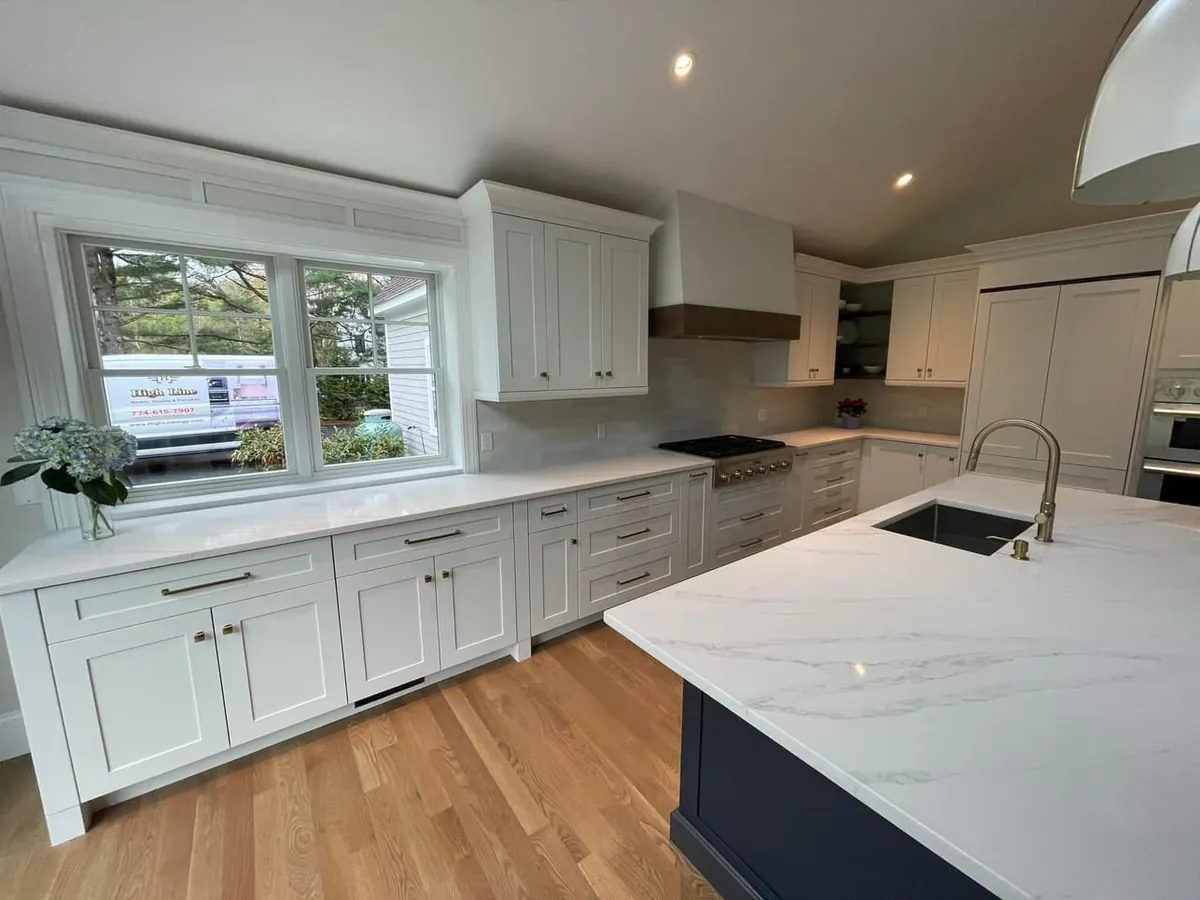
A renovation in Newton, MA goes best when you sort out three questions before choosing finishes: which review your project triggers, what era your house comes from, and how much budget you hold back for what is inside the walls. Newton's thirteen villages were built at different times, and the same project can look very different from Chestnut Hill to Oak Hill.
This guide covers what Newton homeowners commonly run into, the city rules that shape a schedule, and how to plan a budget you can stick to. It is a planning tool, so you can ask better questions and compare estimates on equal terms.
Find out which rules apply before you design
Newton has more layers of review than most suburbs, and the time to learn which ones apply is before you pay for drawings.
First, check whether your address is in one of the four local historic districts: Auburndale, Chestnut Hill, Newton Upper Falls or Newtonville. In those districts, exterior changes generally need approval from that district commission before the building permit moves forward. Interior work is generally not their concern.
Second, ask whether any part of your plan counts as demolition. Newton reviews full and partial demolition of buildings that are 50 years old or older, including garages and sheds. Removing a rear wall, a porch or part of a roof to build an addition can fall under this. If the Newton Historical Commission finds a building preferably preserved, a delay of 12 months can apply, or 18 months for buildings on the National Register. Most simple projects never reach that point, but knowing early lets you design around it.
Third, the energy code. Newton adopted the Massachusetts Specialized Opt-in Energy Code. It mostly affects new houses and major additions, so ask early how it applies if you plan to add a lot of square footage.
How your house era changes the job
Newton grew in waves. Large Victorians and Colonial Revivals went up near the railroad stations in West Newton, Newtonville, Auburndale and Newton Centre in the late 1800s and early 1900s. Newton Upper Falls and Newton Lower Falls kept many older mill-era homes. Waban, Newton Highlands and much of Newton Centre filled in from the 1920s through the 1940s. After World War II came Oak Hill Park and the ranches and split-levels of Oak Hill and Thompsonville.
Look up your year built in the city assessor records and write down any past renovations you know about. That date predicts more about your remodel than the size of the room.
What tends to turn up behind Newton walls
Victorian and early 1900s houses often have plaster and lath, balloon framing with open cavities from basement to attic, and sometimes knob-and-tube wiring that is still live. Joists may have been notched by past plumbers, and floors drift out of level. Any home built before 1978 likely has lead paint on trim, windows and doors, and work that disturbs it must follow lead-safe practices.
The 1920s to 1940s colonials in Waban and Newton Highlands are usually well framed, but expect original cast iron drains, older electrical panels and bathroom tile set in a thick mortar bed. That old tile is solid and heavy, and removal takes longer than most owners expect.
Postwar capes and ranches can hold galvanized supply pipes, undersized electrical service and older materials such as 9 by 9 inch floor tile or pipe wrap that may contain asbestos. Have suspect materials tested before demolition starts.
Two-family homes, common in Nonantum and Newton Corner, add their own wrinkle: shared systems, fire separation between units and the need to keep the second unit livable while the first is torn apart.
Projects that make sense in Newton houses
In prewar colonials, the most valuable changes are usually layout changes: opening a closed kitchen to the dining room, adding a half bath on the first floor or turning an attic into a usable room. A kitchen with new cabinets and quartz counters can feel like a new house when the floor plan works.
On Victorians, the exterior often comes first. Porches, columns, trim, clapboard and roof flashing take a beating, and rot left alone spreads into framing. Fixing the envelope before a big interior remodel protects the money you spend inside.
For postwar houses, dormers, second stories and rear additions are common, along with new decks and siding. Just remember that partial demolition rules can apply once a house reaches 50 years old, which now includes most of them.
Timing the work around the seasons and reviews
Roofing, siding, decks, porches and stone work belong in late spring through fall. Mortar needs temperatures above freezing to cure, and new roofing and paint go on best in mild, dry weather. Kitchens, baths, basements and floors can run all year.
A good rhythm for many Newton owners: design in the fall, take historic or demolition review and permits through the winter, and start exterior work as the season opens. Commission meetings run on a calendar, so if you wait until April to apply, the exterior work can slide into late summer.
Budgeting realistically
Renovation costs around Newton sit at the higher end for Massachusetts because of labor rates, older homes and finish expectations. Published ranges vary a lot by source, but many midrange kitchen remodels in Greater Boston land well into five figures, and full bathroom remodels commonly run into the tens of thousands. Additions are often the largest line item. Treat any number you read as a rough starting point, not a quote.
What moves the price most: structural changes, relocated plumbing, electrical upgrades, the age of the house, cabinet and counter choices, and any review that adds design time. Hold a contingency of around 10 percent for newer homes and closer to 15 to 20 percent for houses from before World War II.
Living through a Newton renovation
Many Newton streets are narrow, and driveways are short. Ask your contractor where the dumpster and trucks will go, how neighbors will be kept informed and how the site gets cleaned each day. Set up a temporary kitchen if yours is being redone, and talk through dust protection for the rooms you still use.
NC Construction is a general contractor based in Woburn that works in Newton. Nathan, the owner, walks the house, writes the estimate and is on the job, and we explain the permit process and help handle it. If you are planning a project, request a free written estimate.
Frequently asked questions
- Which Newton villages have local historic districts?
- Newton has four local historic districts: Auburndale, Chestnut Hill, Newton Upper Falls and Newtonville. Exterior changes in them generally need district commission approval. The city can confirm whether your address is inside one.
- Does Newton demolition review apply to additions?
- It can. Newton reviews full and partial demolition of buildings 50 years old or older, and removing part of a house for an addition may count. Ask about it before you finalize the design.
- How long can a demolition delay last in Newton?
- If a building is found preferably preserved, the delay is 12 months, or 18 months for buildings listed on the National Register. Most ordinary remodels never reach that stage.
- Does the Specialized energy code affect a Newton remodel?
- Newton adopted the Specialized Opt-in Energy Code, which mainly affects new homes and major projects. A typical kitchen or bath remodel is usually not affected much, but a large addition may be.
- How much contingency should I set aside in an older Newton home?
- For houses built before World War II, many owners plan for 15 to 20 percent of the project cost. Newer homes often need around 10 percent.
Found this helpful? Make us a preferred source on Google.
Free estimate
Want real numbers for your project?
Get a free, written estimate based on your home, not a phone guess.